PEARL
6 days agoNews Editor

PEARL falls 29% from its peak as RTX 3080 mining revenue drops to a theoretical $2.50 a day

PEARL, also referred to as PRL, is the native token of the Pearl blockchain, whose mainnet launched on April 27, 2026 with a maximum supply of 2.1 billion coins. The network has drawn attention for tying mining to matrix multiplication, the same type of computation widely used in AI models, rather than conventional hash-based work. According to CoinGecko data cited in the source, PEARL hit an all-time high of about $2.46 on the evening of Oct. 21, Taiwan time, before falling to $1.75 by 1:30 p.m. on Oct. 27, a decline of roughly 29%. Mining estimates cited from F2Pool and Kryptex show that an RTX 3080 can theoretically produce about 1.43 PRL per day, worth around $2.50 at the quoted token price, before electricity costs, pool fees, and hardware depreciation. The report also lists estimated output for other Nvidia cards, from the RTX 2060 Super to the RTX 5090. At the same time, a proposed protocol change known as PIP-3 could reshape hardware eligibility. Kryptex said the draft proposal would move mining from integer operations to FP8 floating-point operations and only whitelist Nvidia Hopper and Blackwell architectures, which would exclude RTX 20, 30, and 40 series cards if adopted as currently interpreted.


380
PEARL falls 29% from its peak as RTX 3080 mining revenue drops to a theoretical $2.50 a day
PEARL
6 days agoNews Editor

PEARL’s ‘AI Bitcoin’ pitch faces a reality check on utility, supply and adoption

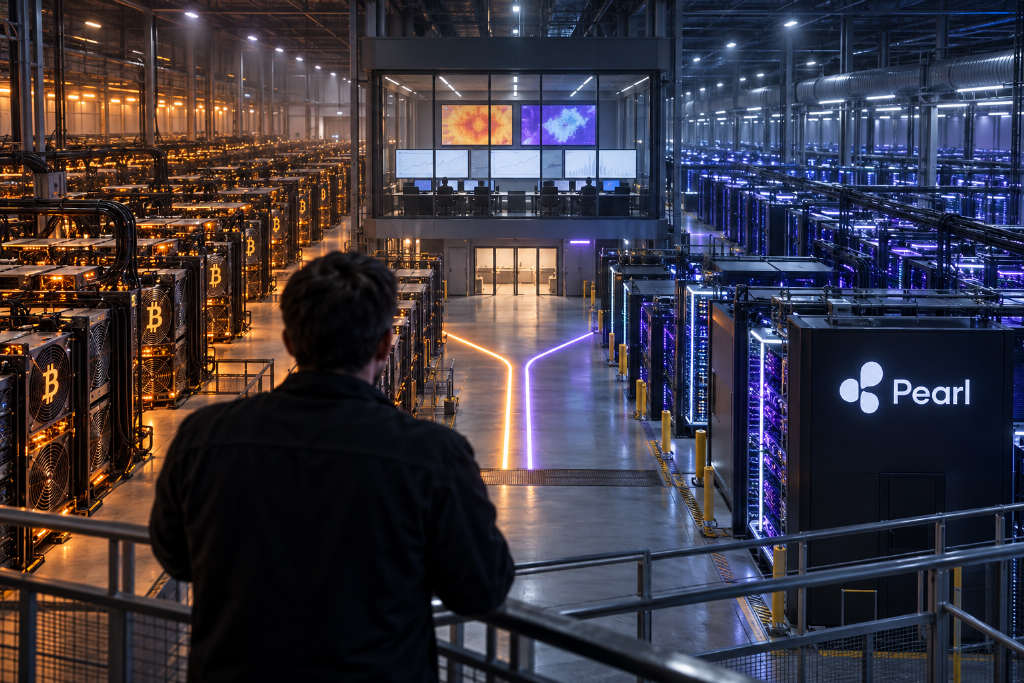
A PANews analysis by Go2Mars Labs argues that PEARL has become one of the more closely watched crypto projects of the current cycle because it tries to replace Bitcoin-style hash mining with AI matrix multiplication. The project’s core pitch is straightforward: the same GPU workload could run AI inference for customers and produce block rewards at the same time, a model the community describes as “AI computation as mining.” That idea is built around Proof of Useful Work, or PoUW, and draws on academic work around proving arbitrary matrix multiplication. The report, however, says the gap between Pearl’s narrative and its current state remains wide. Most of the network’s hashpower is still said to be running random matrices rather than paid AI inference, meaning the system has not yet delivered the “useful work” story at scale. The article also points to heavy early issuance, concentrated low-cost supply from the first days of mining, and ongoing daily token emissions of more than 1 million PEARL as major overhangs. Go2Mars Labs concludes that PEARL’s short-term price action is being driven more by community consensus, exchange access and market attention than by fundamentals. Over a longer horizon, the report says the project’s valuation will depend on whether its FP8 upgrade goes live, whether AI companies can mine without meaningful efficiency loss, and whether useful compute becomes a meaningful share of network activity.

350
PEARL’s ‘AI Bitcoin’ pitch faces a reality check on utility, supply and adoption
Pearl
7 days agoNews Editor

Pearl Research Labs raises $130 million as transparency questions surface around PRL

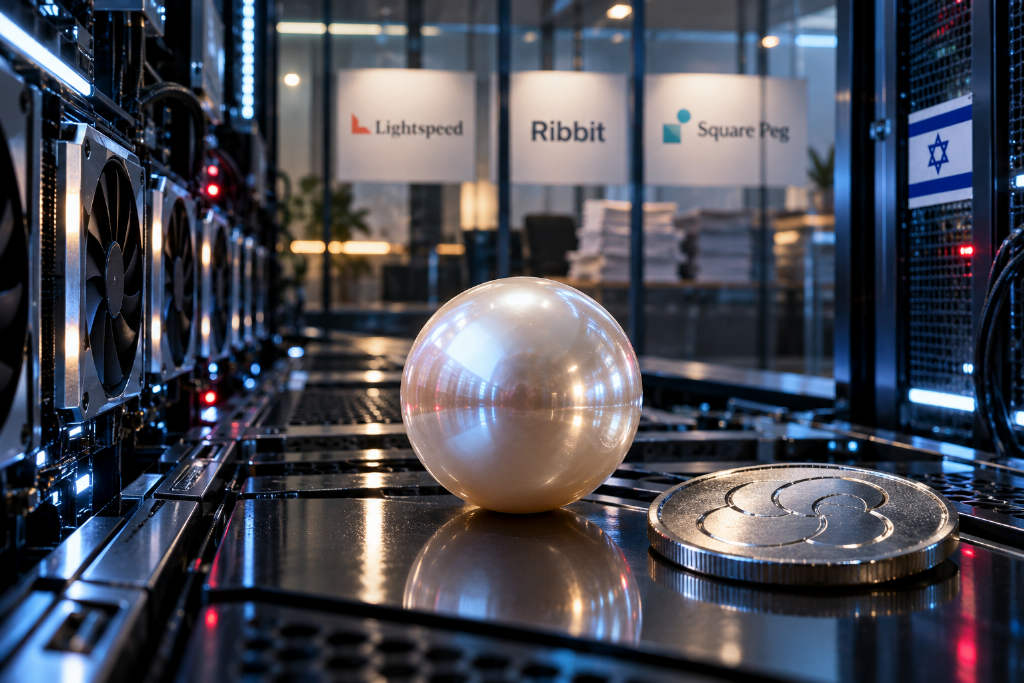
Israeli media outlet TheMarker reported on Oct. 25 that Pearl Research Labs, the Israeli research lab behind AI mining project Pearl (PRL), has raised a total of $130 million. The funding includes $55 million in equity financing and another $75 million allocated to a GPU infrastructure fund. Investors named in the report include Lightspeed, Ribbit and Square Peg. The report also said PRL gained about 520% in the three months after its late-April launch, with its circulating market capitalization at one point reaching $710 million. That performance, together with the project’s "AI Bitcoin" narrative, drew market attention. At the same time, TheMarker said the company had not fully disclosed key financing details or the operating structure of its GPU infrastructure fund, raising questions about transparency.

360
Pearl Research Labs raises $130 million as transparency questions surface around PRL
PEARL
7 days agoNews Editor

Blockworks analyst challenges PEARL thesis over inflation, token demand and security budget

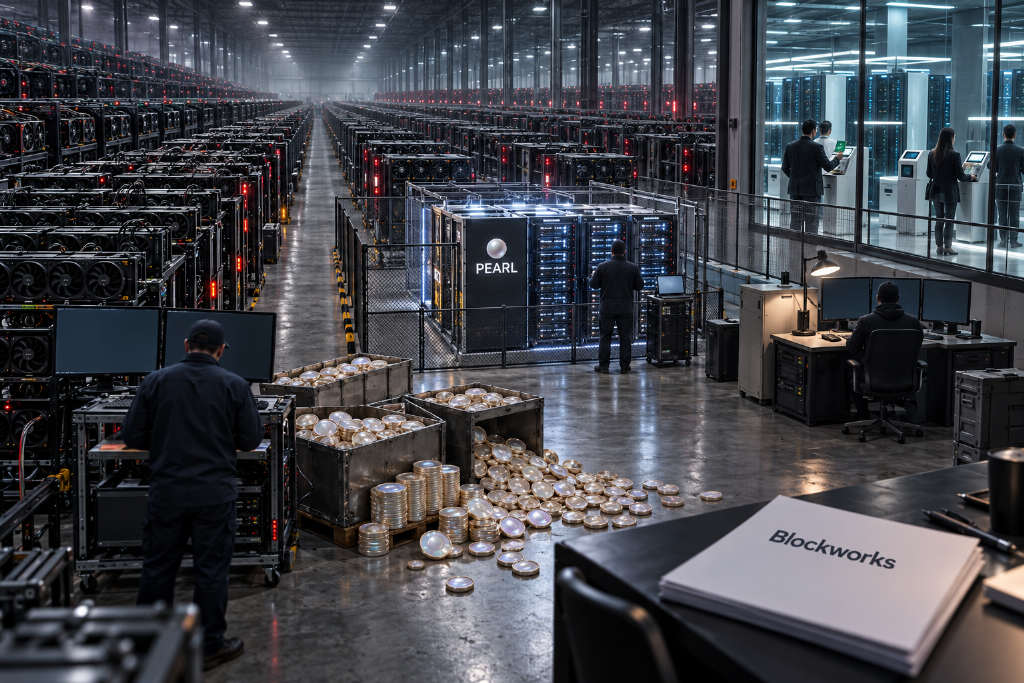
A Blockworks analysis by researcher Jake Koch-Gallup takes direct aim at PEARL, one of the more closely watched AI-mining narratives in crypto. The report does not dismiss the project’s appeal outright. It acknowledges that PEARL’s Proof of Useful Work model tries to solve a long-running criticism of Bitcoin mining by redirecting GPU compute toward AI training and inference while also securing a blockchain. It also notes the project’s academic founding team, fair-launch positioning, and recent market momentum, including an roughly 8x rise from an August low near $0.27, weekly volume climbing from $2 million-$3 million in August to $51 million last week, and Coinbase adding PEARL to its listing roadmap on Oct. 19. The bearish case, however, is built around four points. First, Koch-Gallup argues that PEARL’s roughly 85% annual inflation in the coming year creates a supply burden that secondary markets may struggle to absorb. Second, AI customers pay in U.S. dollars rather than PEARL, which in his view means network usage does not create native token demand. Third, because PEARL relies on standard data-center GPUs rather than specialized ASICs, he argues the network faces a security profile closer to smaller proof-of-work chains that were vulnerable to rented-hash attacks. Fourth, he points to Zcash’s early history as a warning that market cap growth can coexist with severe price declines when supply expands too quickly.

370
Blockworks analyst challenges PEARL thesis over inflation, token demand and security budget
Pearl
11 days agoNews Editor

Pearl’s 10x run puts its AI mining thesis in focus, but liquidity and token pressure remain

Pearl, a Layer 1 blockchain built around Proof of Useful Work, has become one of the market’s most closely watched AI-linked crypto projects after its token surged from $0.23 to $2.2 in four months, lifting its market capitalization to $760 million. The project’s pitch is unusual: reuse GPU matrix multiplication from AI inference as mining work, allowing the same compute to generate blockchain security proofs while also serving AI workloads. On-chain activity has grown alongside the rally. Active holding addresses topped 68,000 as of Oct. 21, while daily new addresses climbed to 4,982. At the same time, token ownership remains concentrated, with the top 100 addresses holding 42.12% of supply and the top 10 holding 14.15%. Trading value is concentrated as well, with the top 1% of transactions accounting for 96.3% of total transferred value over the past 30 days. Pearl has also drawn attention from firms and industry figures including No Limit Holdings, Dragonfly, Stripe’s CEO and DWF Ventures. Yet the project still faces unresolved questions: whether most mining can be tied to real AI demand, how PEARL captures value from AI services, how the market absorbs ongoing token issuance, and what concentrated mining power means for decentralization. Those issues sit alongside weak secondary-market liquidity, with 98.8% of 24-hour spot volume concentrated on SafeTrade, BigONE and Ourbit.

520
Pearl’s 10x run puts its AI mining thesis in focus, but liquidity and token pressure remain
Pearl
14 days agoNews Editor

Pearl pitches AI mining as a fix for Bitcoin’s security budget problem

Bankless analyst David Christopher argues that Pearl should be viewed less as an "AI Bitcoin" narrative and more as an attempt to answer a basic Proof-of-Work question: who pays for network security. In his analysis, Bitcoin miners face mounting pressure as block rewards shrink every four years, while transaction fees still fall short of sustaining security on their own. Pearl, a Bitcoin hard fork that launched in April, tries to change that equation by replacing conventional SHA-256 hashing with matrix multiplications tied to AI inference workloads. Under Pearl’s model, miners can still earn PRL by running the required computations on random inputs, but those serving real AI customers can also collect fiat or stablecoin revenue on top of block rewards. The idea is that external demand for AI inference could cover a large share of operating costs, reducing the need for miners to sell newly mined tokens into the market. Christopher says the bigger long-term upside would come if Pearl can build a decentralized AI inference market settled in PRL, especially through its work with Attestable on a proof-of-inference layer focused on privacy and cryptographic verification. He also flags major risks, including high first-year inflation, "junk mining," three hard forks over the summer, mining-pool concentration, and the possibility that large AI data centers could become dominant actors in the network.

1620
Pearl pitches AI mining as a fix for Bitcoin’s security budget problem
Pearl
17 days agoNews Editor

PRL Jumps More Than 250% in 30 Days as Pearl’s AI Mining Model Faces Its Real Test

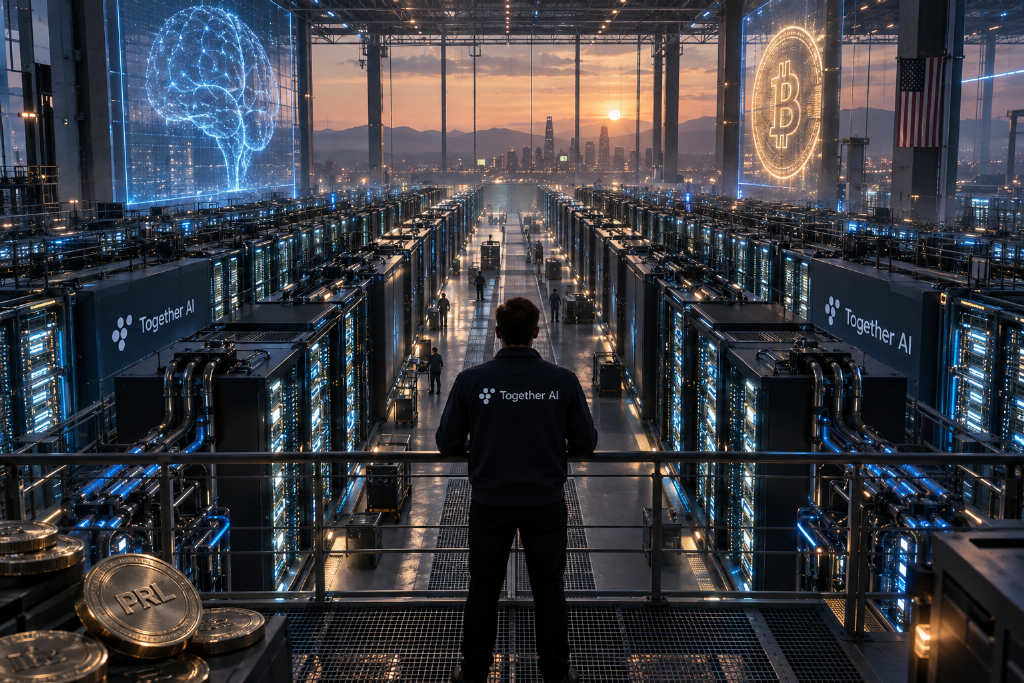
Pearl Research’s token PRL has turned into one of the strongest movers in the AI crypto segment, rising about 64% over the past seven days and nearly 261% over 30 days as of Oct. 14, with a circulating market capitalization of roughly $650 million. The rally has drawn attention to Pearl’s core pitch: a Proof of Useful Work, or PoUW, design that aims to let GPUs handle AI workloads while also producing blockchain mining rewards. The idea is straightforward on paper. Instead of using compute power only for traditional proof-of-work hashing, Pearl replaces that work with matrix multiplication, a core operation used in AI training and inference. That gives GPU operators a shot at earning both AI service revenue and PRL mining rewards from the same hardware. The project has also pointed to a commercial example through its integration with Together AI, which said expected mining rewards allowed more than 25% discounts on certain model API prices. Still, the model has not cleared its biggest questions. Input data cited by CoinW Research Institute shows Pearl has yet to fully prove how much of its compute comes from real paying AI demand rather than synthetic mining activity. PRL’s token structure also adds risk: only about 16.4% of the 2.1 billion maximum supply is in circulation, while roughly 1 million PRL are estimated to be newly issued each day. With fully diluted valuation nearing $4 billion, the project now has to show that revenue, demand and token value capture can keep up with market expectations.

650
PRL Jumps More Than 250% in 30 Days as Pearl’s AI Mining Model Faces Its Real Test
Pearl
23 days agoNews Editor

Why Pearl Became One of the Most Mentioned Projects at Token2049

Pearl has become a frequent topic at Token2049, largely because it sits at the intersection of two strong themes in 2026: AI and fair launch. The project pitches itself as a Proof-of-Useful-Work network, where miners use GPU power for matrix multiplication rather than conventional hash calculations, with the idea that mining could also support AI inference. That narrative has helped Pearl earn comparisons to an "AI-native Bitcoin" among supporters. Bulls point to three main arguments: a sovereign-free digital asset backed by compute and energy, a mining model aligned with AI-driven energy demand, and a "2-for-1" unit economy in which one GPU workload could generate both inference revenue and PRL rewards. The pushback is more technical. Pearl’s own design, as described in the source text, can verify that matrix multiplication happened, but not whether the work was tied to an actual AI inference task. Critics argue this opens the door to "job-binding failure," where miners can perform cheaper random matrix calculations instead of useful inference while still receiving rewards. The article also cites research involving 8,012 miner nodes and 44 accepted shares generated from random matrices. Pearl’s team has acknowledged that the chain currently has no onchain metric for measuring the share of useful mining and argues the economics could improve through future protocol upgrades. That leaves Pearl positioned less as a settled AI infrastructure play and more as a high-conviction bet on whether AI inference and GPU mining can eventually merge into one system.

5230
Why Pearl Became One of the Most Mentioned Projects at Token2049
Total 11 items
Go topage